A blog to share barn owl and other wildlife and general news about the Retreat and its environment.
Four of the barn owlets can now fly up to the box exit
03. July 2026, Wildlife
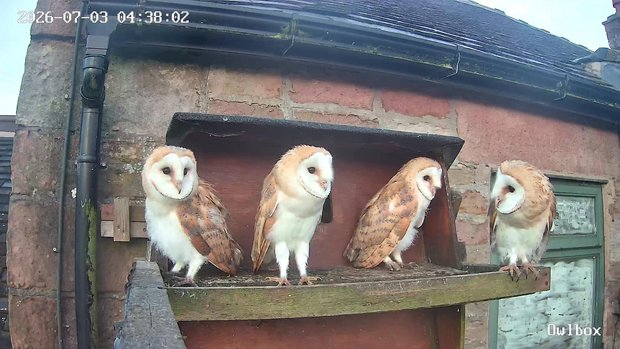
Four of the owlets are now strong enough to fly up about 700mm from the base of the box to the exit hole. The other two will need to develop a bit more then they will be able to do it as well.
Barn owlet news and update
02. July 2026, Wildlife
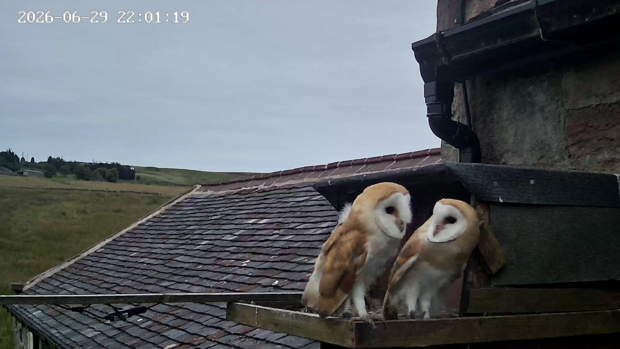
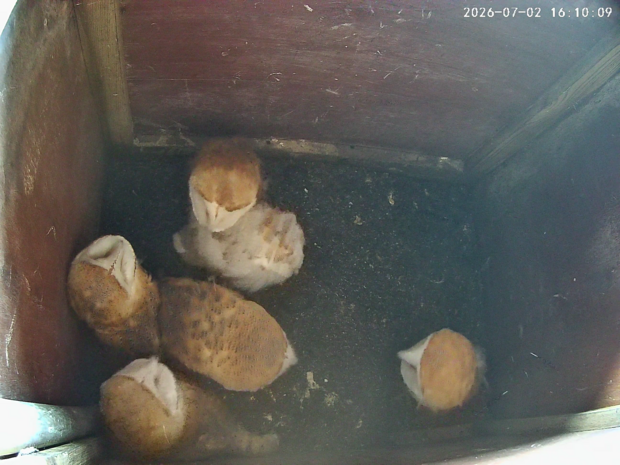
The barn owlets are doing well. The first two, which got out of the nest box a bit early, 10-12 days ago, are flying well and exploring the neighbourhood. They are probably beginning to hunt for themselves, though I've not witnessed that. They return to the box to take prey from the parents.
Later last evening a third one (58 days old) got out of the box for the first time.
They are all being fed regularly and are growing well.
Continue, to read about their reaction to their first contact with rain…
Barn owlet update
16. May 2026, Wildlife
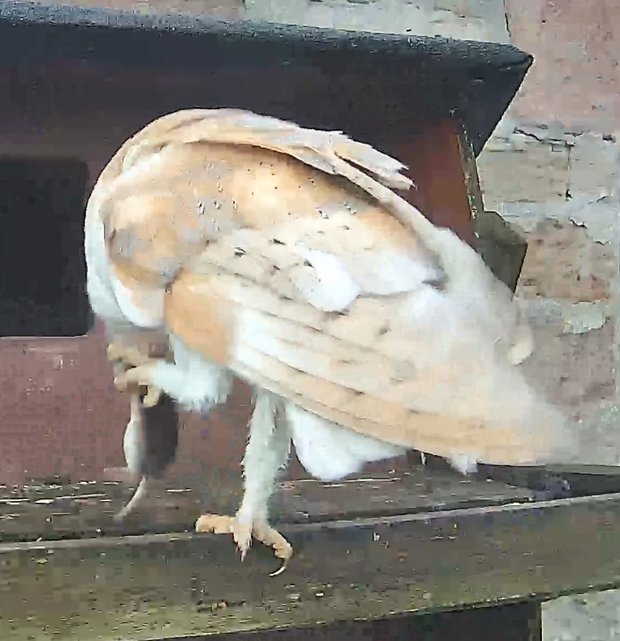
Unfortunately we have lost the youngest owlet, the one that hatched last Sunday. This morning the female owl pulled out the small corpse from underneath her. So now there are five.
Fortunately in this area there is a plentiful prey for them, and the male is hunting well and bringing prey to the female and the young. They should not suffer shortage of food which may otherwise be a common problem.
Of course this is how nature works. Our survival record has been good in the past, with four eggs in 2023 and 2025 (no nesting in 2024), and four hatchings led to four successful fledgings in each case. (The typical survival rate from hatching to fledging is more like 40-50%)
PS see the update - the sixth owlet has been found!!
All four barn owlets have fledged successfully
02. August 2025, Wildlife
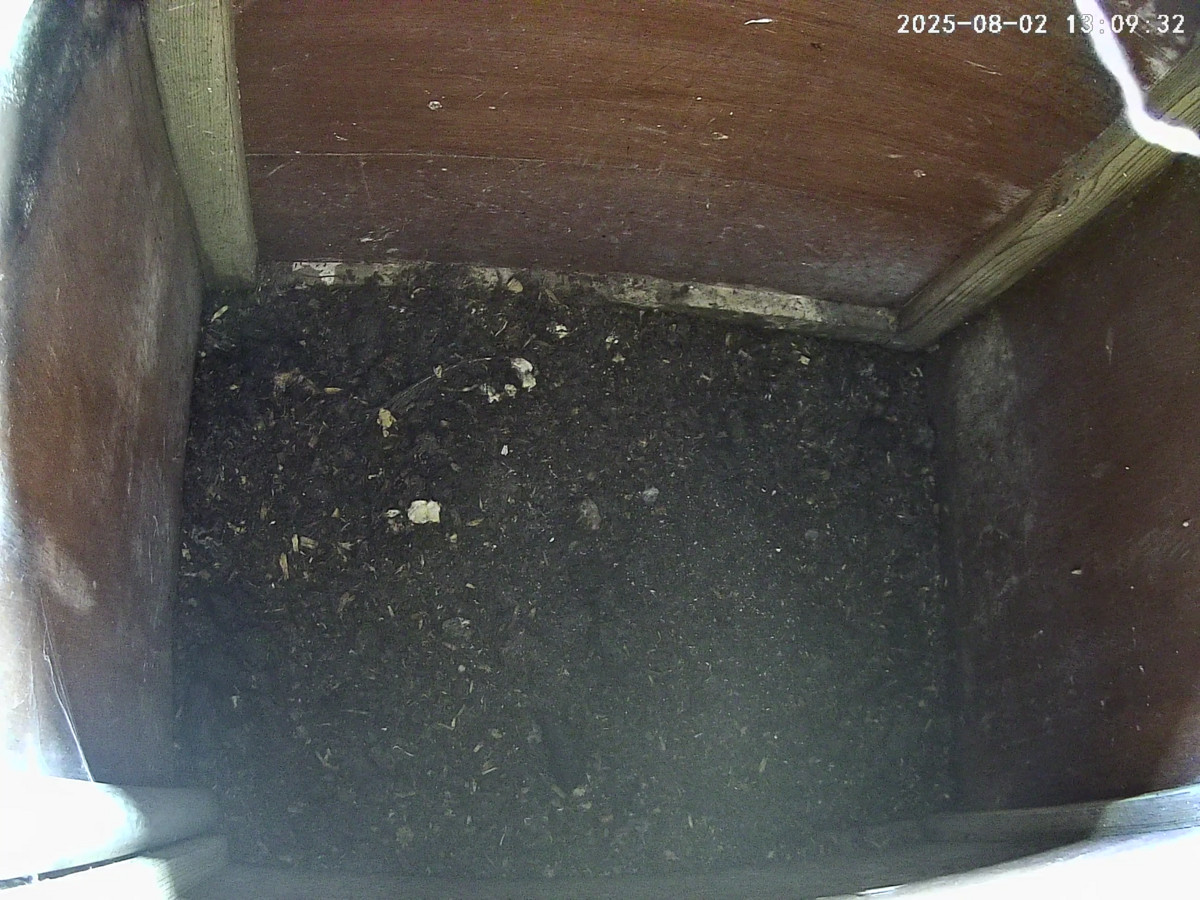
We had four eggs laid. All four hatched and all four owlets have grown and fledged successfully.
This morning there are no owlets roosting in the box. Last night one owlet was on the ledge but had to go hunting for itself as, for the first time, no parent brought any prey to feed it.
Over the last few days occupancy has been intermittent, and it is possible that one or even two of them may visit over the next few days, but soon they will be dispersing away from this area to find an unoccupied territory that they can make their own.
We have enjoyed seeing them all flying around the area, and perching on the ledge, between dusk and dawn for the last few weeks. Until next year…
More text/images... All four barn owlets have fledged successfully
2023 Barn owl nesting success - 4 eggs, 4 fledging
17. July 2023, Wildlife
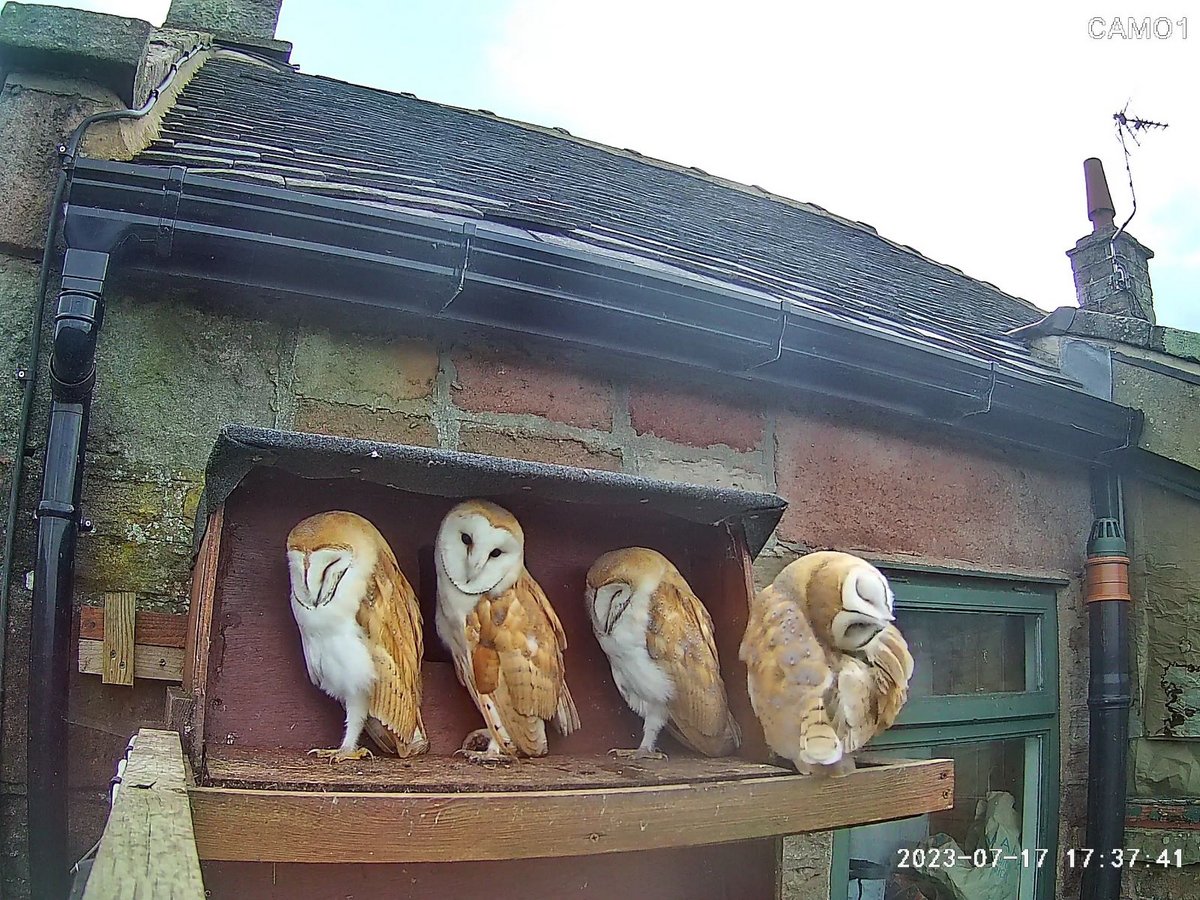
2023 has been a successful year for our barn owls.
The pair settled into the box earlier in the year. Four eggs were laid, four eggs all hatched, and four owlets all grew and fledged. They are pictured here just after the youngest of them finally grew strong enough to fly up from the bottom of the deep nest box to get out of the entrance hole.
This success is despite the male seemingly not being a very diligent provider and rarely bringing prey for the young, with the burden of the feeding falling on the female.